Ensure Longevity with Expert Installation
Turn to Us for Concrete Driveway Installations in Grand Rapids and surrounding areas
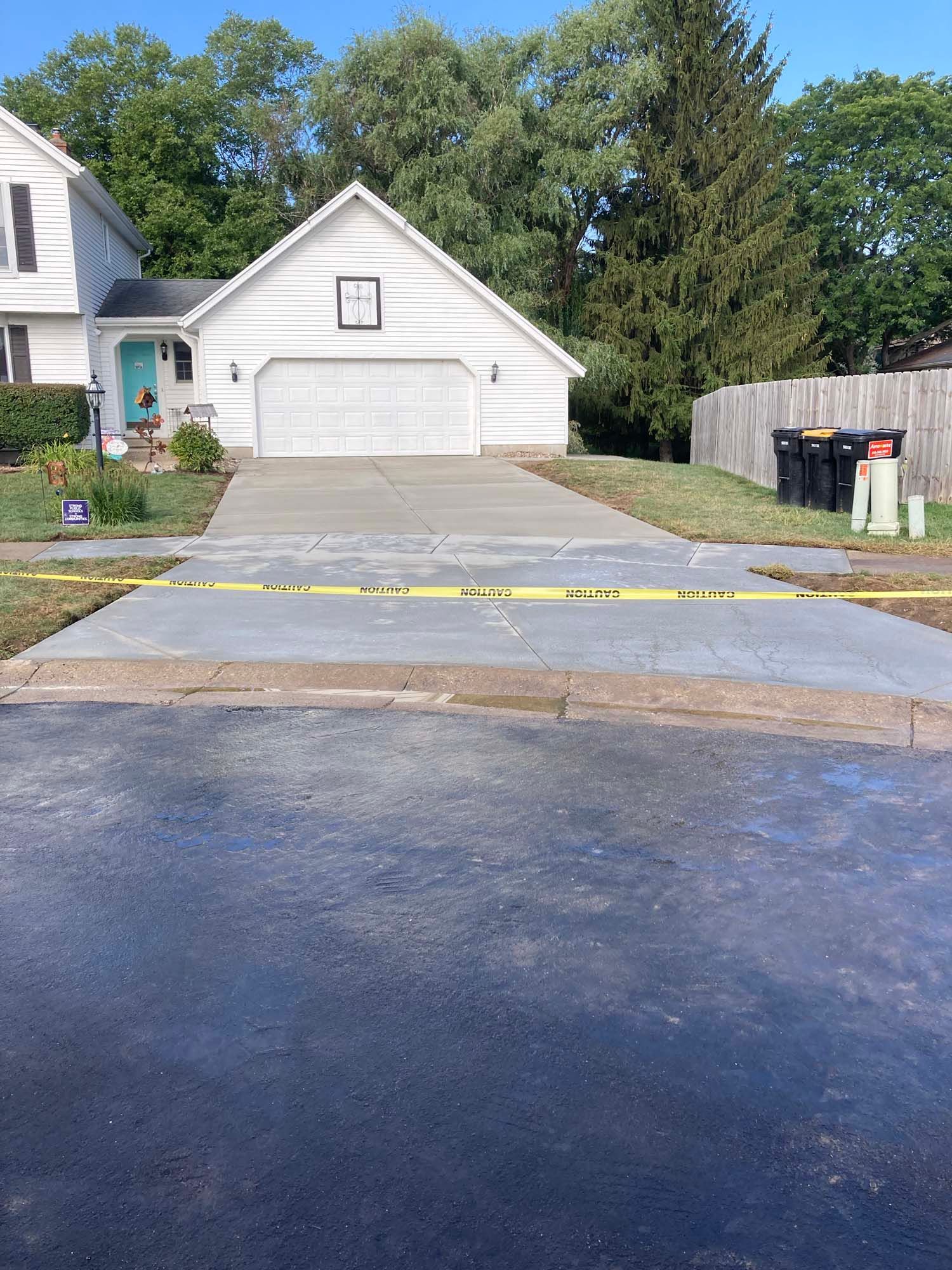
Are you looking to upgrade your home's exterior with a new concrete driveway in Grand Rapids? At K&M Concrete, we specialize in crafting durable concrete driveways using the highest quality materials. With 40 years of experience, our family-owned business ensures that every residential project is executed with precision and care. Imagine the smooth surface of your new driveway as you drive up to your home. Isn't it time to consider a free estimate for your project?
Our licensed and insured team is dedicated to providing top-notch service, ensuring your driveway not only looks great but stands the test of time.
Call today to schedule your concrete driveway installation!
Key Benefits of This Service
Choosing a concrete driveway with us means investing in quality and durability. Our team in Grand Rapids and surrounding areas are committed to delivering exceptional results, and here's what you can expect:
- Free estimates for all residential clients
- Use of the highest quality materials
- Licensed and insured professionals
- Family-owned business with 40 years of experience
- Commitment to customer satisfaction
Contact us to learn more about how we can enhance your property with a new concrete driveway installation.
How long does a concrete driveway last in Michigan?
A properly installed concrete driveway typically lasts 30 or more years in Michigan when poured with high-strength mix and correct technique. Using 4000 PSI concrete helps resist the seasonal freeze-thaw stress that shortens the life of lower-grade installations.Why does concrete crack after Michigan winters?
Freeze-thaw cycling is the primary culprit — water seeps into small pores, expands when frozen, and stresses the slab from within. Concrete specified below 4000 PSI, or poured without proper subgrade preparation, is especially vulnerable to cracking and heaving over time.What is stamped concrete used for?
Stamped concrete is commonly used for driveways, patios, and walkways where homeowners want the look of stone, brick, or tile with the structural integrity of a continuous poured slab. It offers decorative appeal without the gaps, shifting, or weed growth that come with pavers.Is stamped concrete slippery when wet?
Stamped concrete can be slippery if left unsealed or finished too smoothly. A textured pattern and anti-slip sealer significantly improve traction on driveways and patios — making finish and sealer selection important steps when planning an outdoor installation in wet climates.How thick should a residential concrete driveway be?
Most residential driveways are poured at 4 inches thick, though areas subject to heavier vehicle loads — like trucks or RVs — benefit from 5 to 6 inches. Proper subbase compaction matters just as much as thickness for preventing settling and cracking over time.Can stamped concrete handle Michigan's freeze-thaw cycles?
Yes, when installed with the right concrete mix and properly sealed, stamped concrete holds up well through Michigan winters. High-PSI concrete limits moisture absorption, and regular resealing every few years protects the surface and color from weathering and salt exposure.When's the best time to pour a new driveway?
Late spring through early fall is the ideal window for concrete work in West Michigan. Moderate temperatures allow concrete to cure evenly — extreme cold slows hydration and risks frost damage, while summer heat can cause the surface to dry too fast and develop surface cracks.Does stamped concrete cost more than plain concrete?
Stamped concrete typically costs more than standard flatwork due to the added labor, pattern tools, color additives, and sealer required. The premium is offset by its curb appeal and the fact that it eliminates the ongoing maintenance cost of individual pavers or natural stone.How soon can you drive on a new concrete driveway?
Most residential concrete driveways are ready for light foot traffic within 24 hours and can handle vehicle weight after 7 days of curing. Full strength develops over 28 days, so avoiding heavy loads and sharp turns early on helps protect the surface finish long-term.What's the difference between concrete and asphalt driveways?
Concrete driveways last significantly longer than asphalt — typically 30-plus years versus 20 — and don't require periodic resurfacing. Concrete also holds up better to road salt and heavy vehicles, while asphalt is more flexible but softens in heat and needs more frequent maintenance.